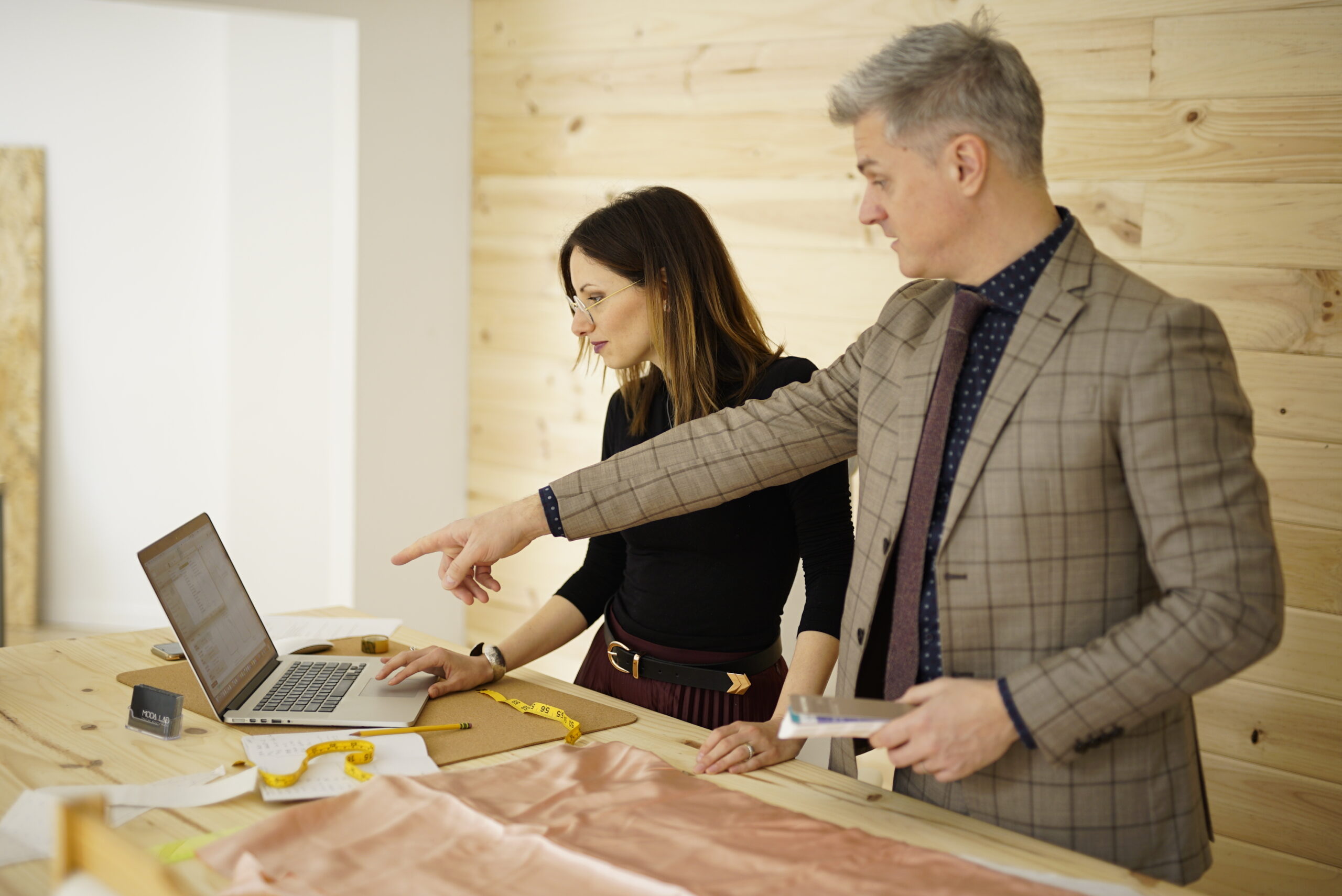
What is Fashion Product Development?
Fashion product development is the process of turning a creative idea into a product that can be produced and sold. It connects design vision with real-world constraints like fit, materials, costs, and manufacturing limits.
Its purpose is to:
- make ideas technically feasible
- reduce risks before production starts
- prevent costly mistakes and delays
- ensure quality, consistency, and scalability
- align the product with brand and sustainability goals
When handled correctly, fashion product development creates clarity and control. It allows brands to move from concept to production with confidence, knowing the product can be manufactured reliably and perform as intended in the market.
The Fashion Product Development Process (Step by Step)
The fashion product development process is designed to reduce risk before production begins. Each phase serves a specific purpose, helping brands move forward with clarity instead of assumptions.
-
1. Concept Development
Establish the creative direction, target positioning, and collection structure before technical work begins. This includes clarifying the range plan and creating visual references that guide later development decisions.
-
2. Tech Packs
Convert creative concepts into structured technical documentation. Measurements, materials, construction details, and tolerances are clearly defined to ensure alignment across teams.
-
3. Sourcing
Identify fabrics, trims, and suppliers that meet quality standards, cost targets, and sustainability goals. Early sourcing decisions protect margins and reduce later disruptions.
-
4. Paper & Digitized Patterns
Develop precise pattern structures that define fit, proportions, and construction logic. Accuracy at this stage supports repeatability and reduces sampling revisions.
-
5. Prototyping & Fitting
Create physical samples to validate balance, comfort, and construction. Controlled revision rounds refine the product before production decisions are finalized.
-
6. Costing Sheet
Consolidate all development inputs into a structured cost breakdown. Materials, labor, and complexity are evaluated to confirm pricing strategy and margin viability.
Who is involved in fashion product development?
Fashion product development is a collaborative process that involves multiple roles working toward a shared outcome.
Each role brings a different perspective, balancing creativity, technical feasibility, and production realities.
When these responsibilities are fragmented, misalignment and delays are more likely.
| Role | Why they matter |
|---|---|
| Designers and creative teams | Define the product vision, aesthetics, and overall direction, ensuring consistency with the brand identity. |
| Product developers and technical specialists | Translate creative ideas into technical solutions, managing fit, specifications, timelines, and feasibility. |
| Manufacturers and suppliers | Execute production, source materials, and ensure the product can be made consistently at the required quality and scale. |
At MODA LAB, these roles are coordinated within a single workflow.
Brands work with one team that aligns design, technical development, and manufacturing support, helping reduce friction and keep decisions consistent from concept to production.
Fashion product development timelines and costs
Fashion product development timelines and costs vary based on product complexity, sourcing location, and the level of refinement required before production. While every project is different, most development processes fall within predictable ranges.
- Development timelines typically span 3–9 months, depending on sampling rounds, revisions, and production readiness.
- Sampling and development costs commonly range from $2,500–$18,000+, influenced by materials, pattern complexity, and the number of iterations.
- Production lead times usually add 2–6 months, especially when sourcing from European manufacturers, where quality standards and lead times are higher.
Projects stay on track when decisions are made early and revisions are controlled. Clear timelines and realistic cost ranges help brands plan responsibly and avoid last-minute compromises that affect quality or margins.

Common fashion product development mistakes brands make
Common fashion product development mistakes often come from rushing decisions or underestimating early phases of the process. These issues usually surface later, when changes are more expensive and harder to manage.
Brands frequently struggle with:
- starting development without clear direction or validation
- skipping proper fit testing to save time or budget
- incomplete or unclear technical documentation
- underestimating production constraints and lead times
- making late changes that disrupt costs and quality
Most of these mistakes are preventable. A structured development process helps identify risks early, reduces unnecessary revisions, and keeps products aligned with both market expectations and manufacturing realities.
1. Rushing into production without fit validation
Rushing into production without fit validation often leads to avoidable and expensive problems. Skipping proper testing may seem efficient, but it increases risk at scale.
Common consequences include:
- poor fit or imbalance that affects comfort and wearability
- visible construction issues once garments are worn
- repeated customer complaints or product returns
- costly production delays to correct preventable errors
- unsellable inventory that impacts margins
Fit validation exists to reduce uncertainty before large quantities are produced.
Testing and refining samples early helps ensure the product performs as intended, protecting both quality standards and long-term brand credibility.
2. Incomplete or unclear tech packs
Incomplete or unclear tech packs create confusion before production even begins. When specifications are vague or missing, manufacturers are forced to make assumptions — and assumptions rarely align with the original intent.
Common issues include:
- missing measurements or grading details
- unclear material or trim specifications
- inconsistent construction notes
- undefined tolerances or quality standards
- last-minute clarifications that delay sampling
Weak documentation slows communication and increases the risk of costly revisions.
A clear, detailed tech pack ensures everyone is working from the same reference, reducing misunderstandings and helping the product move through development and production with greater accuracy and efficiency.
3. Misalignment between design and manufacturing
Misalignment between design and manufacturing occurs when creative decisions are made without fully considering production realities. What works conceptually may not always translate efficiently at scale.
This often results in:
- design details that are difficult or costly to produce
- materials that are unavailable or inconsistent in quality
- construction methods that exceed production capabilities
- repeated adjustments once sampling reveals feasibility issues
- higher costs that disrupt original pricing strategy
When design and manufacturing are not aligned early, development becomes reactive instead of controlled. Clear communication and technical evaluation help ensure that creative vision remains realistic, protecting timelines, margins, and product integrity.
How to streamline product development
Streamlining product development is less about moving faster and more about reducing unnecessary friction between phases. The goal is clarity before action.
If managing development internally, focus on:
- defining a clear concept and price target before technical work begins
- finalizing tech packs before requesting samples
- limiting revision rounds with structured fitting checkpoints
- documenting every change to avoid repeated confusion
- aligning sourcing decisions with costing targets early
Efficiency comes from sequence discipline.
When each phase is completed with clarity before the next begins, development becomes more predictable, timelines stabilize, and fewer resources are wasted correcting avoidable issues.
When to involve a development partner
Certain stages of growth increase complexity and risk. When internal processes begin to strain, structured guidance can prevent costly delays and missteps.
| You might be here if… | How external support helps |
|---|---|
| Launching a first collection | Provides technical direction, realistic costing, and clear production planning before major commitments are made. |
| Scaling production or adding new categories | Stabilizes processes, aligns suppliers, and ensures quality remains consistent as volumes grow. |
| Teams are stuck in sampling or repeated revisions | Identifies root causes, improves technical documentation, and reduces inefficient back-and-forth with manufacturers. |
Bringing in a development partner is often less about outsourcing work and more about regaining clarity, control, and momentum as the brand evolves.
Fashion product development FAQs
How long does fashion product development usually take?
Most fashion product development cycles take 3 to 9 months, depending on the complexity of the product and the number of sampling rounds required. A small, focused capsule collection may move faster, while technical garments or multi-style collections typically require more time for refinement.
Timelines are influenced by factors such as concept clarity, material sourcing, pattern complexity, and revision cycles. When early phases are rushed, delays often appear later during sampling or production. A structured development process helps maintain realistic timelines while protecting quality and consistency.
What is the biggest bottleneck in fashion product development?
The biggest bottleneck is usually unclear technical direction.
When measurements, construction details, or fit expectations are not defined precisely, sampling becomes repetitive and inefficient.
Instead of moving forward, teams get stuck in cycles of revisions caused by incomplete documentation or misaligned expectations. Late design changes and inconsistent communication with suppliers often make the situation worse.
In most cases, delays are not caused by manufacturers. They originate earlier in the process, where decisions were either rushed or left open to interpretation. Clear specifications and structured checkpoints significantly reduce this risk.
How much should brands budget for product development?
Budgets vary depending on complexity, category, and number of styles, but most brands should expect to invest between $2,500 and $18,000+ per collection for technical development, sampling, and revisions.
Costs are influenced by pattern complexity, material selection, supplier location, and the number of iteration cycles required to reach production readiness. Technical garments or multi-category collections typically require higher investment.
Underestimating development budgets often leads to rushed decisions or compromised quality. Allocating realistic resources early helps reduce production errors, protect margins, and avoid far more expensive corrections later.
Do different product categories require different processes?
Yes. While the overall structure of fashion product development remains consistent, the technical depth and validation requirements vary by category.
For example, tailored garments demand more advanced pattern engineering and fit precision. Activewear may require performance testing and material validation. Accessories often involve different supplier networks and construction methods. Multi-size garments increase grading complexity and fitting requirements.
The framework does not change, but the level of technical refinement does. Understanding category-specific constraints early helps prevent unrealistic timelines and costly adjustments later in the process.